
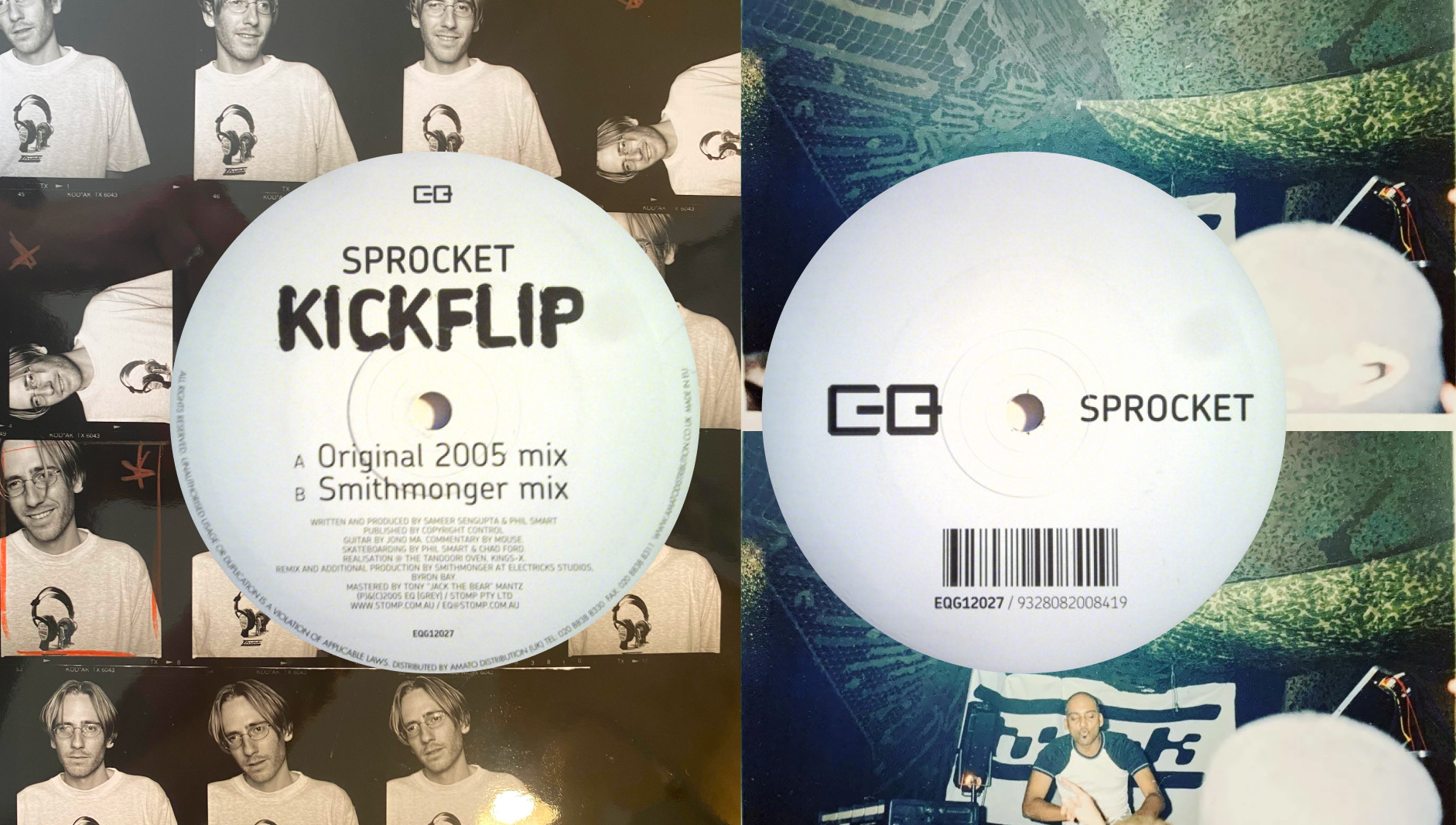
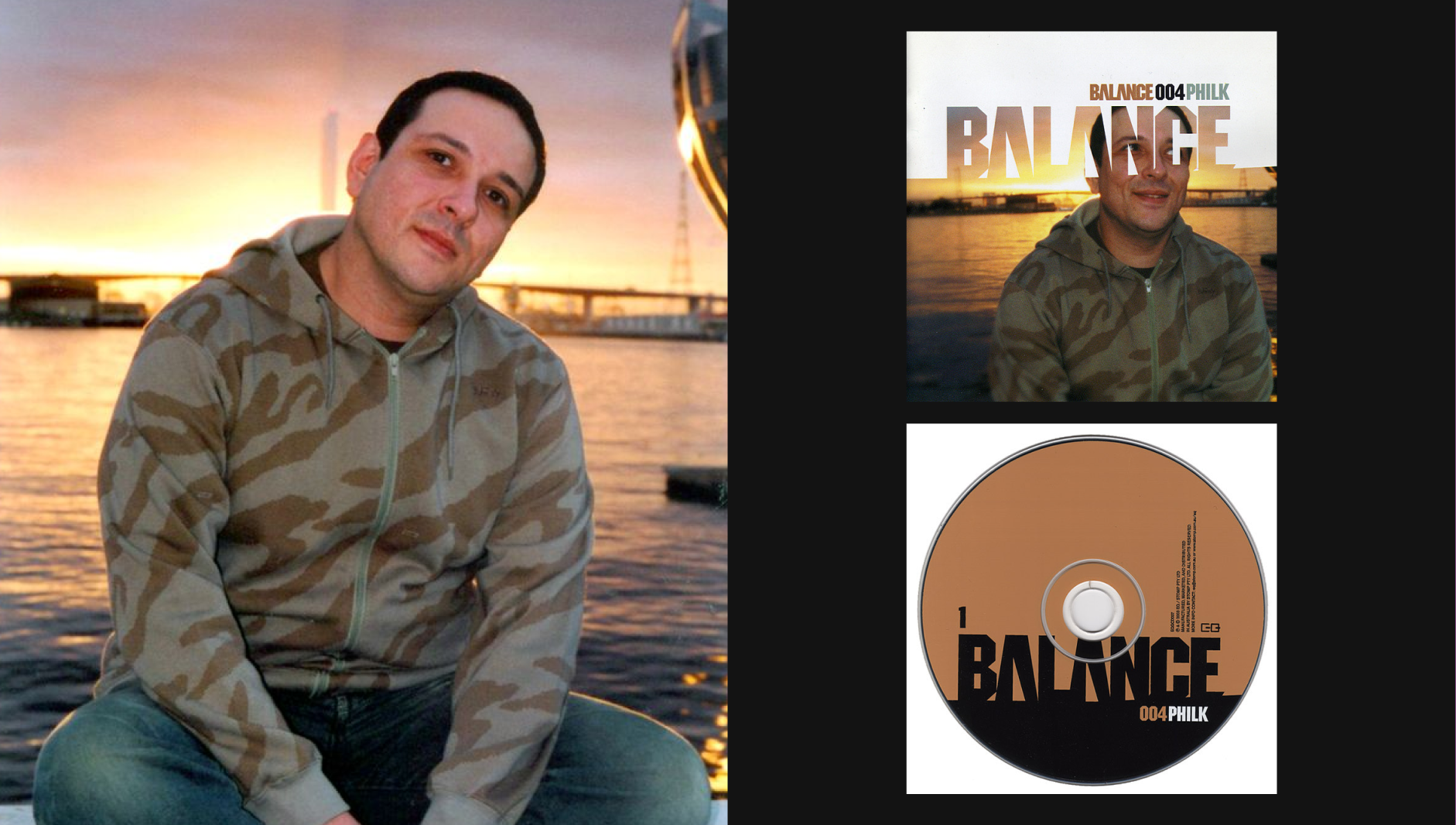
There’s a moment on Phil K’s revered Balance 004 mix that perfectly sums up the freewheeling inventiveness of the Aussie breaks era. Just as the emotional centrepiece of Scrambler’s Free is winding down, the sounds of skateboards clanking on metal and wheels grinding against concrete begin to emerge. You catch a breather, a moment of respite, before stomping breakbeats and gnarly riffs kick in and the mix takes off once more.
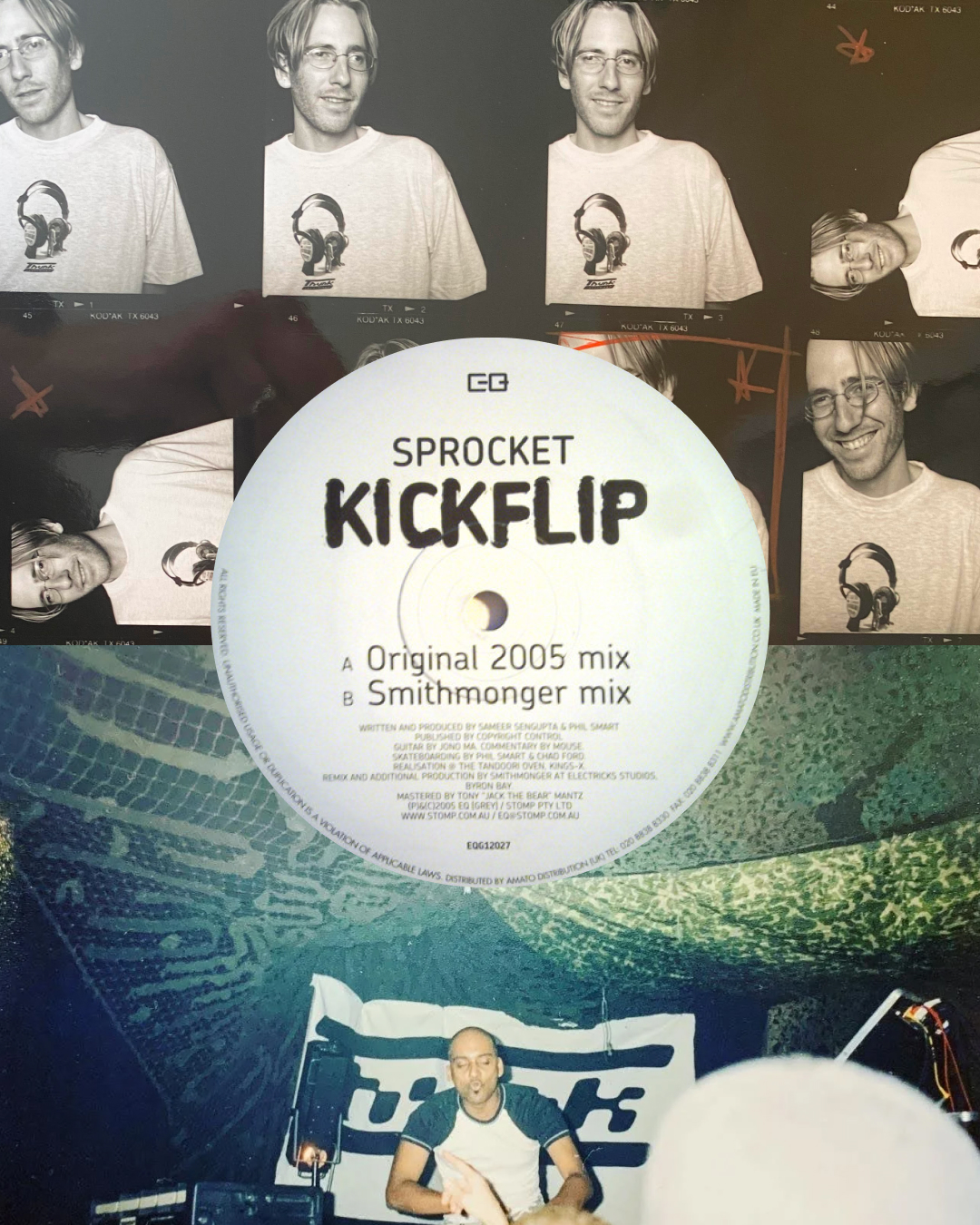
This is how most will remember Sprocket’s Kickflip Manual: a track conceived by Phil Smart and Sameer Sengupta (aka Pocket), with the help of pro skater Chad Ford, in early-2000s Sydney. What began as a curveball idea kicking around in Smart’s head evolved into a fully realised concept record, stitched together from field recordings, DIY experimentation and a love of punk, skating and hyperactive breaks.
Originally selected by Phil K to feature on his Balance 004 compilation in 2002, the track was later given an official release by EQ Recordings in 2005. It was a time when underground dance records weren’t built for algorithms, but for scrunch-faced dancefloor moments and 4am kick-ons. Made, essentially, just for the hell of it. Here, Phil, Sameer and Chad tell the story of Kickflip Manual in their own words.
The Concept
Phil Smart: I was living in Sydney at the time. I think it was just before I moved to Byron Bay. Sameer and I had been good mates for a long time and we’d done some bits and pieces together, but I don't know if we'd ever released anything before. I remember I would go to his studio on William Street all the time. I'm pretty sure that's where the track was made.
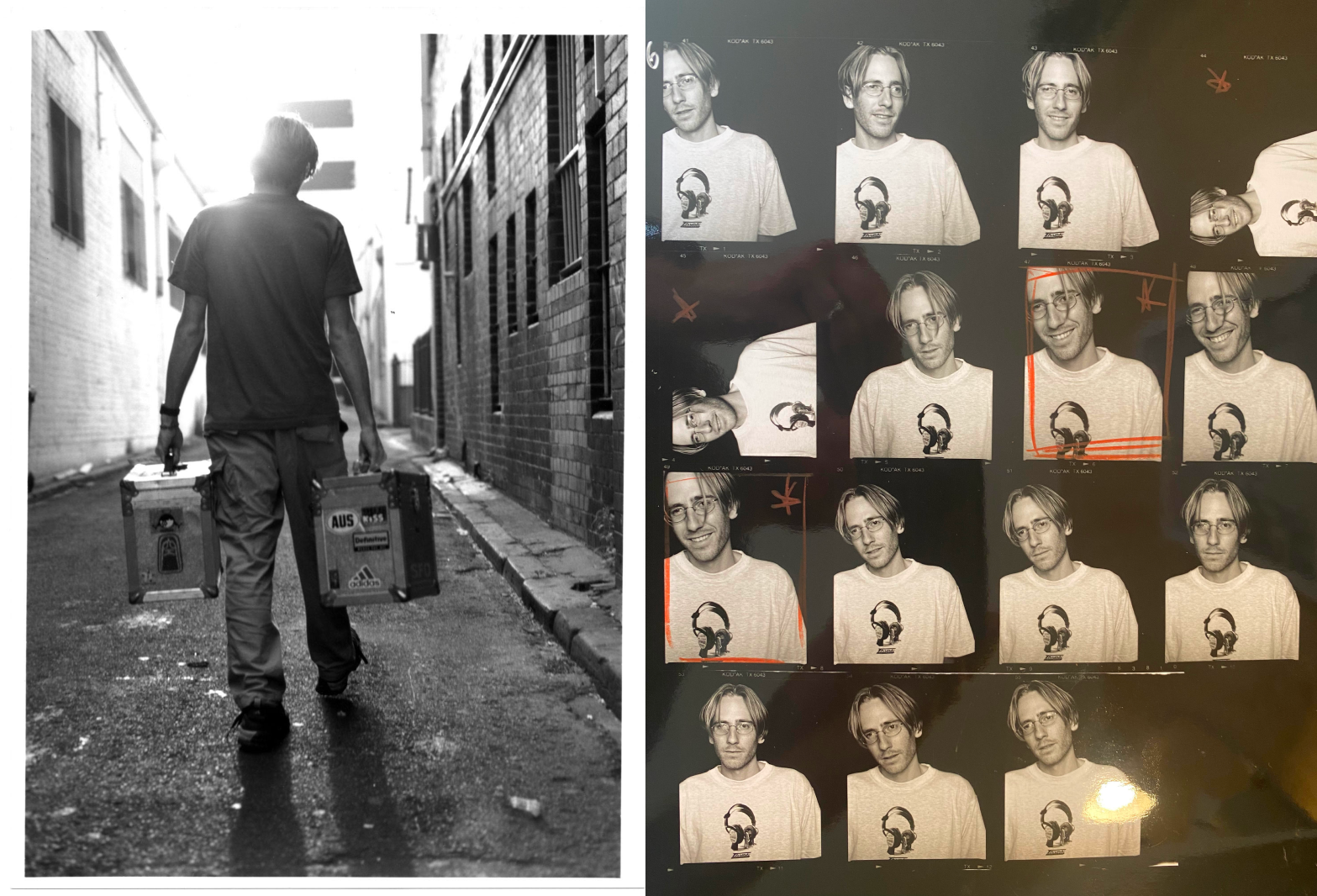
Sameer Sengupta: Phil was a really good friend. We were working closely together because of Thunk [Recordings] which was happening at the time. And I used to play at his Sabotage and Tweekin’ parties at Club 77. He and Chad [Ford] were both big skaters.
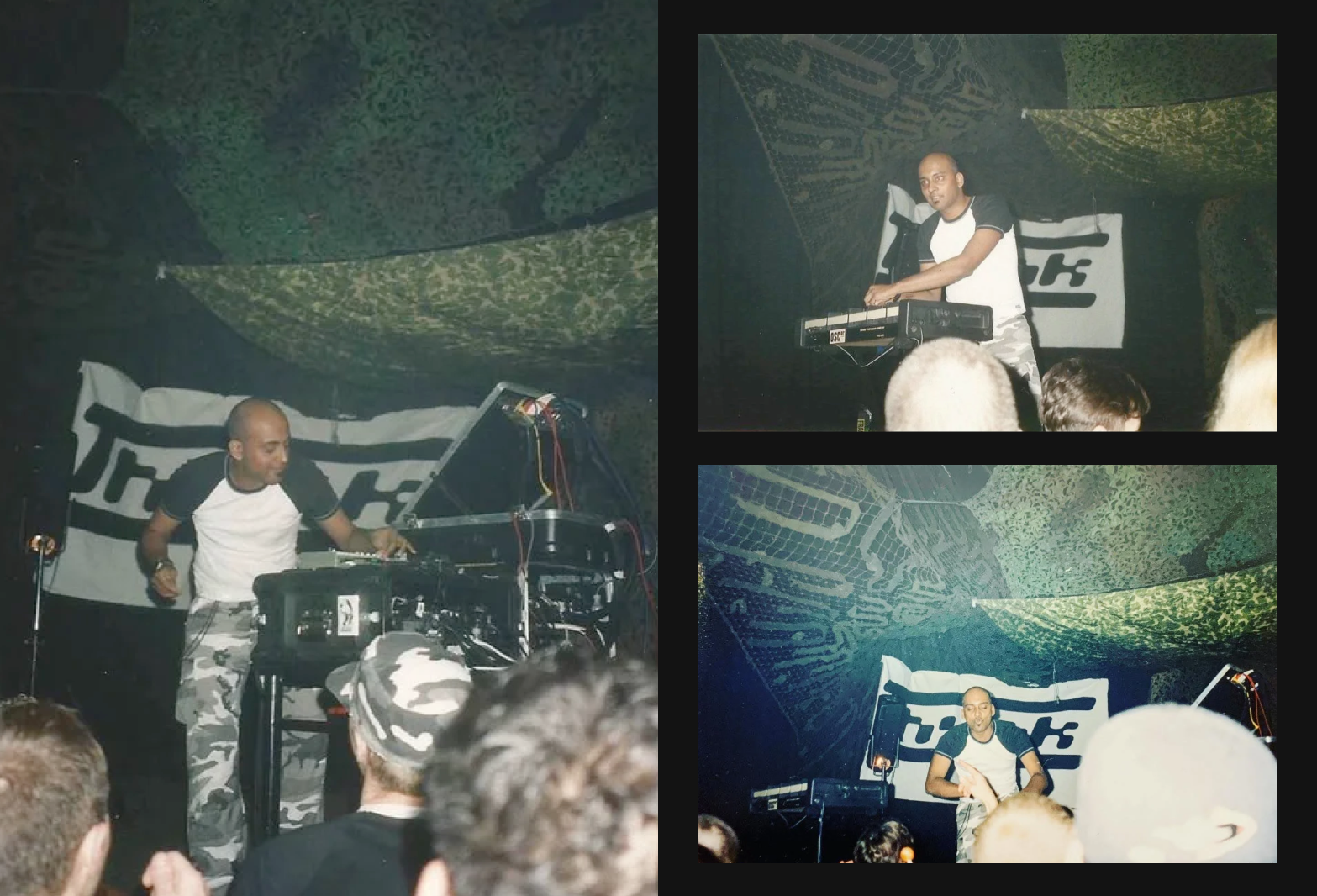
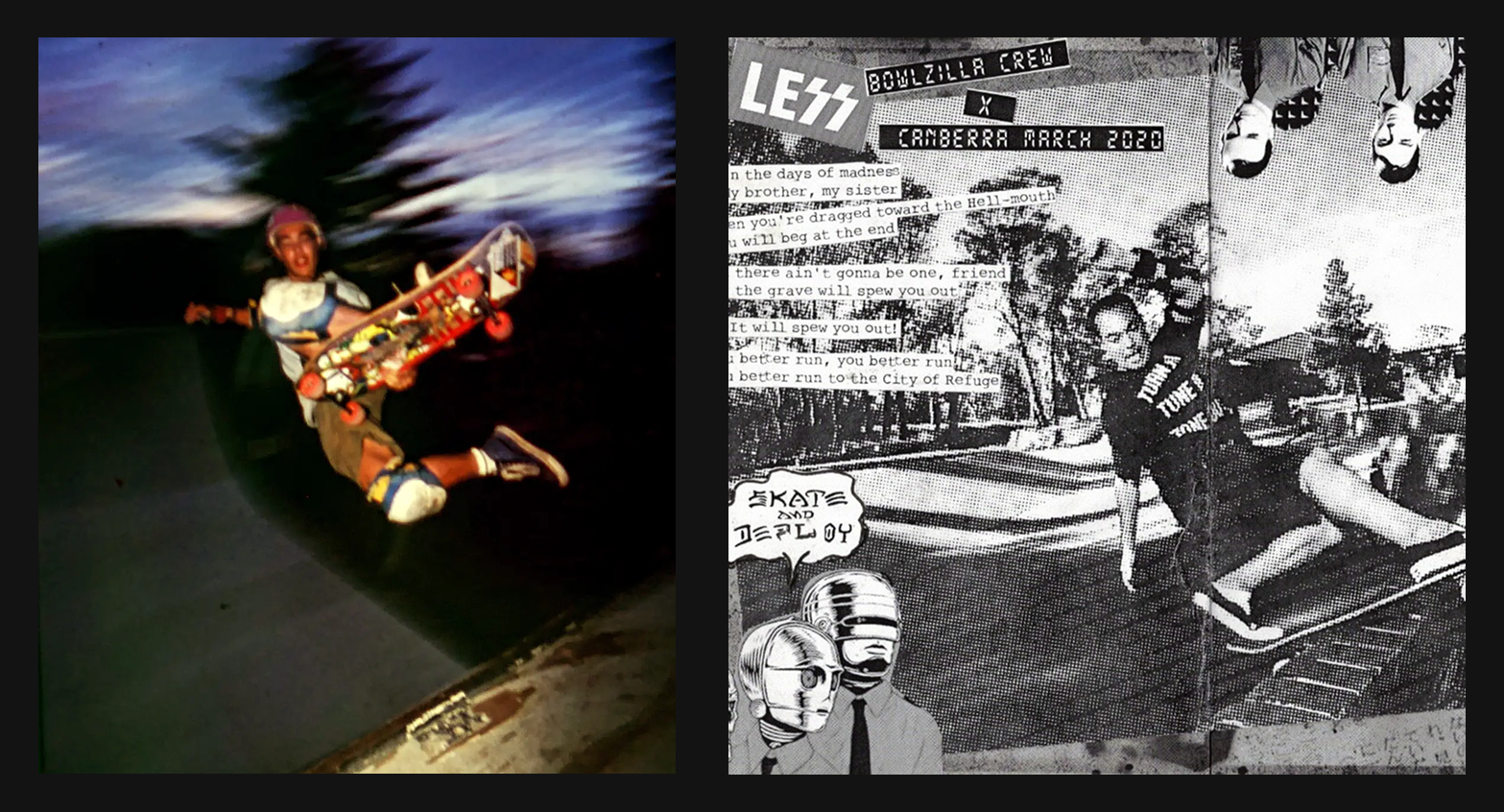
Chad Ford: Phil and I have known each other since the mid 80s from skating. We reconnected in the early 90s through raving.
Phil Smart: I grew up skateboarding. I think I got my first board when I was nine years old. I was born in California, but we left when I was young. But because we still had family there, we’d always go back for trips. I developed a big thing for California surf and skate culture and really got into skating in my teenage years. A lot of ramp and halfpipe stuff, because street skating wasn't a thing like it is now. Skating was my first big passion. It was also a great transportation device. I remember I would skate down Oxford Street to get to work at Reachin Records.
Sameer Sengupta: I'm a skier and tennis player, so I didn’t know anything about the skating world. It was all foreign to me.
Phil: Because of skating, I grew up listening to a lot of punk and thrash. Or skate thrash as we called it. All the bands I grew up listening to had that breaks style of drumming. I’d had this idea to create a track made from skateboarding sounds kicking around in my head for years, because I’d noticed how percussive the sounds of skateboarding were. Being heavily into breaks, I figured it could work if you incorporated them into a breakbeat-driven track. I don't think it would've worked with house music, because skating sounds lend themselves to breaks.
Sameer: Phil came to me with the idea of making a dance track that sounded like Venice Beach. I guess if you're a skateboarder, you understand the palette of sounds you experience when you're doing it. I’m not, so the concept didn’t quite compute at first. But having since lived in LA for many years now, I have a better understanding of how Californian culture influenced the skating world. Phil’s DJ sound at the time was also very West Coast influenced, because he was going back and forth from Australia to LA and San Francisco a lot.
Phil: People often say they can tell that I grew up listening to punk from how I play. I’ve always carried the edginess of punk into my DJing.
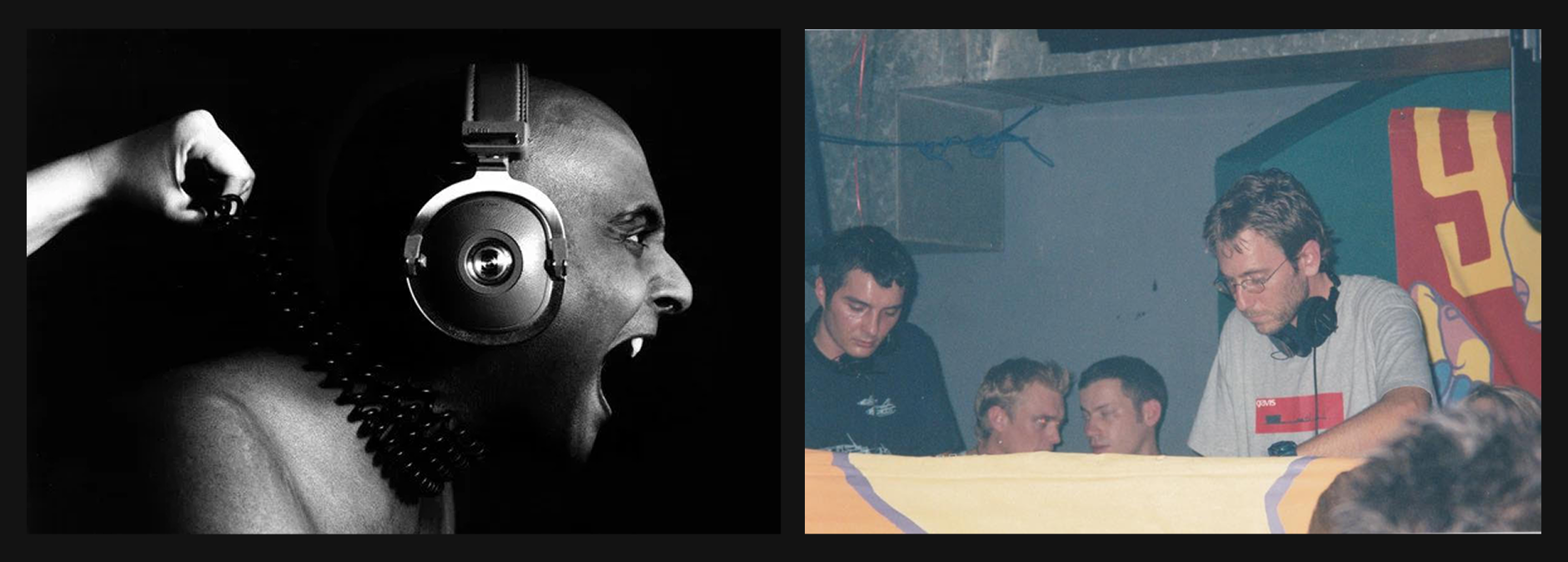
Landing the Kickflip
Phil: That whole DIY, skate-punk philosophy of giving something a crack definitely inspired the sample recordings we used. I've always been into field recordings and finding things in the world to use in music. And even though I love skating, I wasn't really a great skater. Chad, on the other hand, was a pro, so all the skateboarding sounds are of him. I think we recorded the samples using a Mini Disc with a little microphone.
Chad: We recorded at the Fernside skatepark in Waterloo - the old metal one. I coincidentally designed and rebuilt the skatepark in 2006. I reckon we would have got better sounds from the new one with all the concrete!
Sameer: We had a few sessions in the studio. I went through the process of listening to all the skateboard recordings and trying to work out how I could use them. Like okay, that could be a hi-hat and that could be like a snare, and this could be a bit of percussion and that could be a weird noise. I started separating and categorising the sounds, then loaded them onto a sampler and played around with them physically to work out what sounded good and what combinations worked well.
Phil: Sameer being the absolute ninja that he is chopped everything up into this amazing breakbeat track with crazy sounds.
Sameer: I was making a lot of breaks back then, which I loved, so it was an easy process. What I've learned from collaborating with lots of different people over the years is that you quickly work out what each of your strengths are. My strengths are in the hands-on, in putting the grooves together, the nitty-gritty and the microscopic. Phil was much better with the macroscopic, the view of how the arrangement should be. He was like, ‘Okay, let's go with eight bars of this and then eight bars of that. Let's do a little change here and bring in that groove.’ I came up with all the little grooves and bits and pieces and Phil used those to paint the larger picture.
Chad: Sameer contacted me asking for some skate MC commentary to use as a sample to finish off the track.
Phil: The idea of having vocals came from the commentary you’d hear in those televised X Games competitions. We thought it made sense to use someone with an American accent because all the skating commentators were American. I think it was Chad who suggested this guy called Mouse.
Chad: I'd just designed and built the Globe World Cup course in Melbourne and MC Dave Duncan [Mouse] from the US had come to do the commentary for the live broadcast. He stayed on my couch afterwards and did the vocals for the track. We brainstormed various trick names to see what could work.
Sameer: Chad did the script writing for Mouse’s voiceover, putting in stuff like ‘sweet grind’ and all the skating tricks. I had no idea what any of the words meant. To this day I still don’t know what a kickflip manual is! I treated the voiceover to make it sound like it was from a real skateboarding competition and we inserted the crowd noise and stuff like that.
Phil: We didn't want to just rip off someone and sample them directly. We wanted to make everything ourselves. It wasn't supposed to be too serious either, we were just having fun. There are a few jokes in the commentary like the ‘Ghettolympics’ which Chad made up.
Sameer: I don’t think any of us were worried about copyright back then, so even if we had recorded the voiceover from a real competition, I don't think anyone would've really cared. But I was proud that we hadn’t used samples from other recordings. Every single sound on there is original.
Phil: Because I was a punk kid, I figured if you're going to make a skateboarding track, it's got to have some guitars.
Sameer: Phil knew this guy called Jono [Ma] who worked at a guitar store in Bondi Junction. This was before Jono was in the band Lost Valentinos. I’m not sure how they met exactly, but Phil's always been a very outgoing guy. He meets a lot of people.
Phil: Jono Ma and I had become friends through Tweekin’. He was underage at the time and started coming to the Tweekin’ parties and we just clicked. I instantly recognised that he was a special human as he just has this energy about him. We became friends despite the fact there was quite an age gap, especially at the time. We spent time mucking around in the studio and came up with some guitar licks. I can’t recall if we recorded the guitar specifically for the track or if it was left over from something else.
Sameer: Phil was predominantly the creative director of Kickflip Manual. My influence was enabling the idea, the production finesse, and ensuring it had a club feel.
Phil: As always, we were just trying to do our own thing, in our own way, and use elements that were influential to us and what we grew up on. Being Aussie kids, we grew up on rock music, especially our generation at the time. That was our foundation, so it made sense to try and make a dance track with rock elements.
The Phil K Effect
Sameer: Unlike how music is made today, we didn't have a branding or marketing roadmap set in place. These days an Instagram post is ready before the music is even made, but we just didn't think about things like that back then. We didn't have any agenda with trying to release it. We just made a track because we just wanted to make it.
Phil: I think we tested it out at Tweekin’ a few times, because 77 had the early versions of CD players before CDJs. There was also a Smithmonger remix that was great.
Sameer: Phil K and the guys from the Melbourne breaks crew like NuBreed were good friends of mine. I’d often be down in Melbourne playing shows, or they’d be up in Sydney, and we'd all go to each other's gigs. Then we’d be back at some hotel room, hanging out and playing each other tunes until five o’clock in the morning. I’m pretty sure that’s when I showed the track to Phil [Krokodis]. He loved it and wanted to put it on his compilation [Balance 004]. Then through that, Tom [Pandzic] signed it to EQ Recordings and put it out as a 12-inch a few years later. I’m not sure why it was released as ‘Kickflip’ on the 12-inch – it’s hard to remember those kinds of details!
Phil: Phil K was such an amazing human and huge supporter of Aussie music. Back then it was hard to find good outlets and labels for Australian dance music, so having someone like Phil support us was such an honour. For a DJ to choose your track over all the other tracks available in the world, that’s pretty special. And of course it worked beautifully in his mix.
Sameer: I’d had lots of tracks featured on mix compilations before, for DJs like John Digweed and H-Foundation, but Phil [K] had a very particular style, so if you happened to pass his curation filter then it was an honour. I never really bought into that whole Melbourne vs Sydney rivalry; it was rubbish. And really, Phil K was very active in trying to bring the two cities together. He was one of the few people that reached out a lot of Sydney people.
Phil: The Melbourne vs Sydney thing was kind of funny, thinking back on it. It was just so pointless! I remember we hosted Phil K in Sydney for one of his first proper parties, probably for Sabotage or something, and he was so technically advanced that we thought our crowd might not get it. And when digital technology came in, he really pushed the boundaries of where it could go. All the big international guys like Sasha put him on a pedestal. He was one of the best to ever to do it. A special talent that is sorely missed.
A Moment in Time
Sameer: I had a listen to it the other day. I mean from a production standpoint it's hard to judge because I always feel like a track is never finished. There's always an endless list of improvements you can think of when listening back on something 20 years later and this is no different. I’d like to think my techniques have improved and I can express ideas in a better way these days. And know where to cut things down and make them more concise.
Phil: One of the first things I notice listening to it now is how it's such a Sameer produced record. You can hear it in the way he chops things up - the guy's a weapon when it comes to that stuff. I think being a concept record that tells a story makes it unique and why it still holds up. I think that also makes it a valid document of the time.
Sameer: It’s a cool track. It was one of these weird, unique things that we put out and people really liked it. I’m just happy that it had a place in time and made an impact.
Chad: I'm still waiting on my dubplate, festival tour and publishing credit!
Catch Phil Smart all night long this Saturday 04 April at Club 77 from 10pm — 5am.
See event information, register for free entry before midnight via guest list, and grab early bird tickets via RA.
Stay up to date with Phil Smart via Instagram & Soundcloud.
Stay up to date with Sameer Sengupta via Instagram & Soundcloud.
Stay up to date with Chad Ford via Instagram.









.jpg)


.png)

.jpg)

.png)
.jpg)

.jpg)


.png)
.jpg)


.webp)
.png)


.webp)
.webp)
.webp)

