
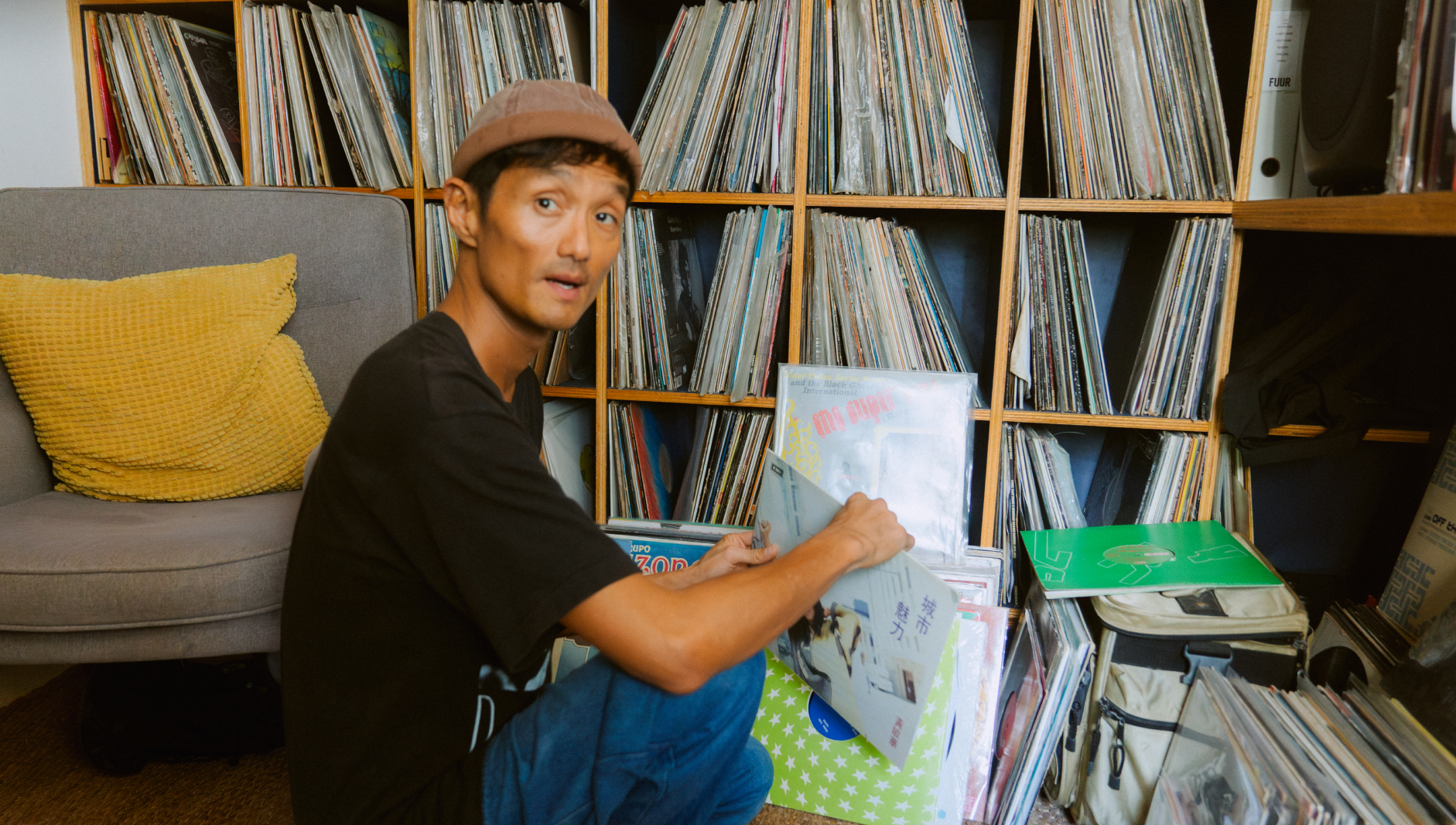
Perth might seem an unlikely origin story for a Singaporean dance music label, but as Dean Chew tells it, the Australian city’s thriving ‘90s club scene helped shape the eclectic DNA of Darker Than Wax – one of the most respected vinyl imprints to emerge in the last decade. Inspired by Perth’s melting pot of genres, alongside formative nights on the dance floor of Singapore’s revered Zouk nightclub, Chew and close friend, saxophonist Kevin Guoh (aka Kaye), founded the label in 2011 to champion the jazz-inflected house emerging in Southeast Asia.
Over the years, Darker Than Wax has grown into a global community of like-minded heads, building a prolific catalogue where organic house sits comfortably alongside hip-hop, funk and Latin rhythms, earning support from revered tastemakers like Gilles Peterson and Bradley Zero.
As the label marks its 15th anniversary in 2026, Chew reflects on its journey from a humble island in Southeast Asia to New York City and beyond, the vibrancy of the region’s club scene, and why a timeless bassline pressed to wax still endures.
You call Singapore home, but is that where you grew up?
Yeah, I’m born and raised Singapore, though I spent a significant period of time in Perth during the 90s while studying architecture at uni. That was quite instrumental for me because Perth had a really healthy rave and university radio scene at the time. And some great record shops too. I was very lucky to be exposed to all the deep house, drum and bass, jungle and the hip-hop parties back then. It was very pivotal time for me because it established a precedence for everything that would follow in my design and music career and my label, Darker Than Wax.
Did you go to any of the touring festivals at that time like Big Day Out or any of the Future Entertainment events?
Yeah, but mostly the small clubs, like Monkey Bar and Players Nightclub, lots of small basement clubs and obviously all the pubs that were doing DIY events. A lot of Chicago house DJs would play in Perth because the city had this deep house movement spearheaded by the likes of James Allen and Ben Taffe, who were personal heroes of mine. I got to see Chicago legends like Chris Gray, Glenn Underground and Boo Williams play, which I’d never have expected to see in a sleepy town like Perth. Those times became part of my DNA.
“Zouk was the epitome of club culture in Singapore.”
What was the nightlife scene in Singapore like at that time?
Singapore has never really been known as a spot for underground music, especially in East Asia, because I think most people would always identify that with somewhere like Japan. There has always been the mobile disc-jockey scene in Singapore, but one of the most pivotal clubs in the '90s that really started the whole underground movement here was Zouk. Which is strange to consider now, since it was bought by a huge casino organisation. But before that, Zouk really was the epitome of club culture in Singapore. I saw so many influential DJs there like Jeff Mills, Stacey Pullen, Gilles Peterson, very early Norman Jay, Sasha, John Digweed. Zouk was the place where we all grew up in. I had such a great experience being immersed in that culture when I was in the army. I served for two-and-a-half years before I went to study in Perth, which all male Singaporeans have to do, and on the weekends we would get trashed at Zouk! That club provided a test bed for us to get curious about different types of sounds and scenes.
Let’s go back to 2011 when you founded Darker Than Wax. What inspired you to start the label?
Around the time I was playing lots of DJ gigs and traveling back and forth between Singapore and Perth. I had a chance to meet up with a self-taught saxophonist and music producer by the name of Kaye. We started playing together as a DJ-saxophonist combo and there many late-night conversations. We realised there wasn’t much representation on this side of the world when it came to the sounds of jazz, hip hop, Afrocentric rhythms, deep house and broken beat vibes, which was all coming up in the early 2000s. We decided we needed a label to spearhead all those sounds that we love and release those kinds of records. It was all very organic.
Was there a crew of DJs playing around Singapore under the Darker Than Wax banner?
Yeah, I guess we were like a loose group of DJs who shared a love of the same sounds, but there wasn’t ever a conscious decision to start a movement or anything. It was really just camaraderie and everyone hanging out on the weekends and talking about music, but it was only when we started the label that I really started to keep an eye out for like-minded DJs to join us. I started to mentor a lot of the younger DJs that came up in Singapore, Marco Weibel being one of them, who's now based in New York running the New York post of Darker Than Wax and doing lots of his own events and radio stuff. I guess you could say the label has become this cluster of people that started fanning out across different pockets around the world.
“I find it incredibly powerful that we were able to start this little movement on a humble island in Southeast Asia which made it all the way to New York.”
How did Marco moving to New York in 2014 help to shape the label?
Very significantly. We have always been very conscious about our connection to America, particularly New York and Chicago, because the music imprint there has been so significant in our growth. When Marco moved there to study design, we saw it as an opportunity for him to start a little outpost for the label over there. And he's done incredibly well for himself in the way he’s inserted himself into the scene and linking up with different DJs and musicians. And that's really created this whole Singapore-NYC connection. It’s really strengthened our relationship to the US scene and helped our cultural cache as well. Many people don’t realise that Darker Than Wax originated in Singapore. I find it incredibly powerful that we were able to start this little movement on a humble island in Southeast Asia which made it all the way to New York. I find that narrative quite romantic.
Darker Than Wax covers a wide spectrum of sounds. Is that diversity a strength, or does it sometimes make positioning the label more challenging?
For the most part I think our diversity has worked for us. Though perhaps it can sometimes work against us when we try to define ourselves in a marketing or media sense, especially in a world of noise where attention spans are shorter and people receive information from so many different sources. But overall, I feel like it's not really a problem because we have already entrenched ourselves firmly in certain pockets and we have our own community. We're not really obsessed with exponential growth compared to other labels. All respect to everyone in the scene and what they’re doing, but for us, we are not so worried about whether people get us or not, because at the end of the day it's about putting out our music in a very honest way.
So what’s the connective tissue? Is there a throughline you look for when deciding on a track or producer to sign to the label?
It’s kind of like a rawness, but fundamentally it's groove. Like if I hear a bassline and it hits me, then I just know it's a great bassline. It's like what Theo Parrish says: A great loop is timeless. And we subscribe to that element of jazz, of improvisation, which is why categories don't matter to us, whether it's hip-hop, downtempo, a straight club banger or the deepest house sounds. It doesn't matter to us because I think there's always a similarity in the groove that connects everything together.
Being a global tourist city, is there a clear divide between the commercial nightlife in Singapore aimed at visitors and the underground scene? Do they crossover at all?
There have been so many different waves and cycles over the years, but I would say now, post-COVID, the dichotomy between the commercial EDM clubs and the underbelly is very distinct. But you can see more curiosity coming from that side of the world into our world. People are more aware of the underground now because of streaming platforms like Boiler Room or Dekmantel Festival broadcasts, which is great. So you do see some overlap. I run a little listening cocktail bar called Offtrack, which began as a post-COVID project, and the space has acted as a beacon for our community as a destination outside of that whole EDM and commercial nightlife scene.
Is it a listening bar in the Japanese sense?
It’s more a compilation of different ideas I’ve gathered from my travels and paying attention to touch points like sensitivity to proper design and sound. As an architect and designer, I’m influenced by certain elements of jazz kissa [Japanese listening bar] culture, but I was also very conscious about not going completely down that route with Offtrack, because I think it’s been a bit overplayed and everyone seems to be doing that now.
How do you think Singapore fits within the broader Southeast Asian electronic music scene? Is collaboration with artists, clubs and collectives from the region important?
Geographically Singapore has always been an important hub, because so many DJs and artists pass through on their way to Australia or Europe. And I think post COVID, we’re starting to see more conversations and exchanges between Bangkok, Jakarta, Vietnam, even Australia. But particularly with Indonesia.
The electronic scene in Bali is really popping off. So many more DJs seem to be playing there now. DJ Harvey even opened a club there. It’s wild.
I know! I used to go to Europe to play a lot, but now I just want to concentrate on this region, because it really is a great time to be here. The whole Southeast Asia region is very vibrant.
Vinyl has always been central to Darker Than Wax. In this digital era, why does the physical format still matter to you?
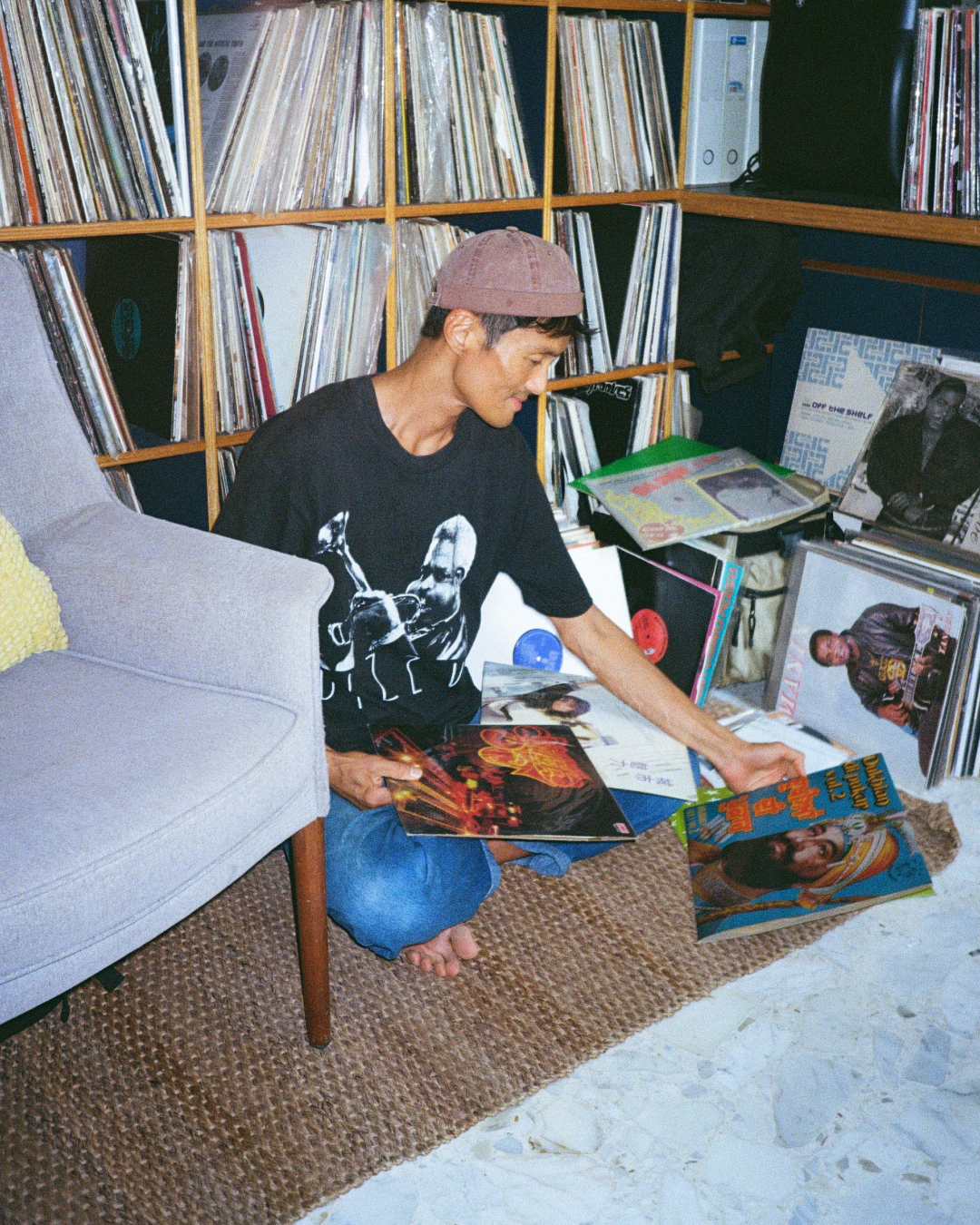
There’s something about the tactile quality of vinyl and the way a physical musical product is pieced together. It tells a story, whether it's liner notes, the artwork, or the smell of the paper. For me, just the touch of it is incredibly important. It also serves as a way to document history - there are certain things that can never be replaced. Most importantly, as a DJ, you can properly develop your skillset by mixing with vinyl and using your ears. I think sometimes the problem with CDJs is that a lot of younger DJs mix visually with waveforms, which I find can be incredibly jarring. It removes any nuance. Don’t get me wrong, I embrace technology and use CDJs, but I approach it in more of an analogue way. I don’t want to be a prisoner to the technology, but rather adapt it to my own way. I think physicality is very important because it ensures attention to detail and craft. I'll always believe that, no matter how much technology changes.
How important is artwork and the visual component of Darker Than Wax?
Extremely. I'm quite obsessive with every detail of the release process. It’s important to communicate visually as well as sonically in order to tell the story of the music, and the story behind making the music. Music and visuals are part of an ecosystem, a language, and you can't divorce one from the other.
What's coming up this year on the label you're excited about? Anything you can share?
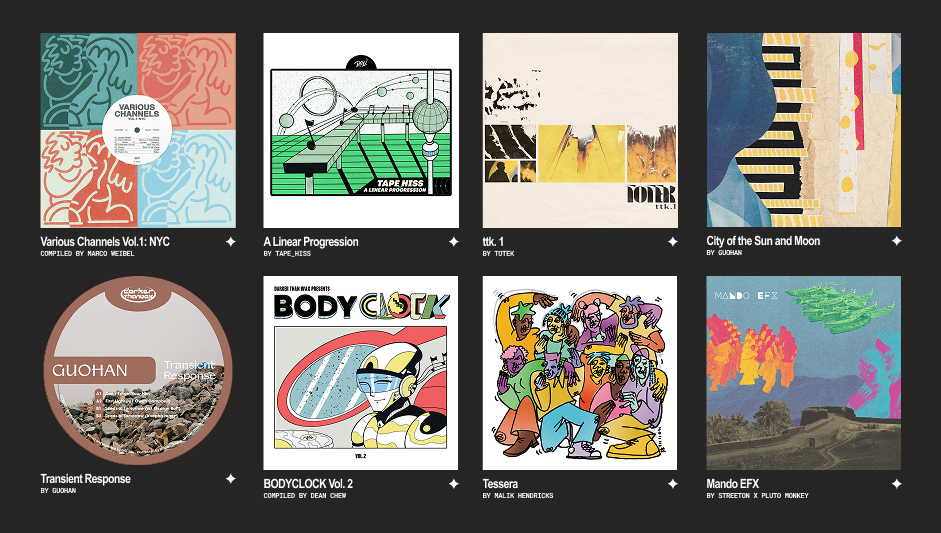
We’re actually celebrating our 15th birthday this year, so we'll be hosting a string of takeovers with friends from around the region. We just had one in Bangkok and have others coming up in Tokyo, Seoul, Taipei, and a few other cities. And of course a string of new vinyl releases. It’s exciting.
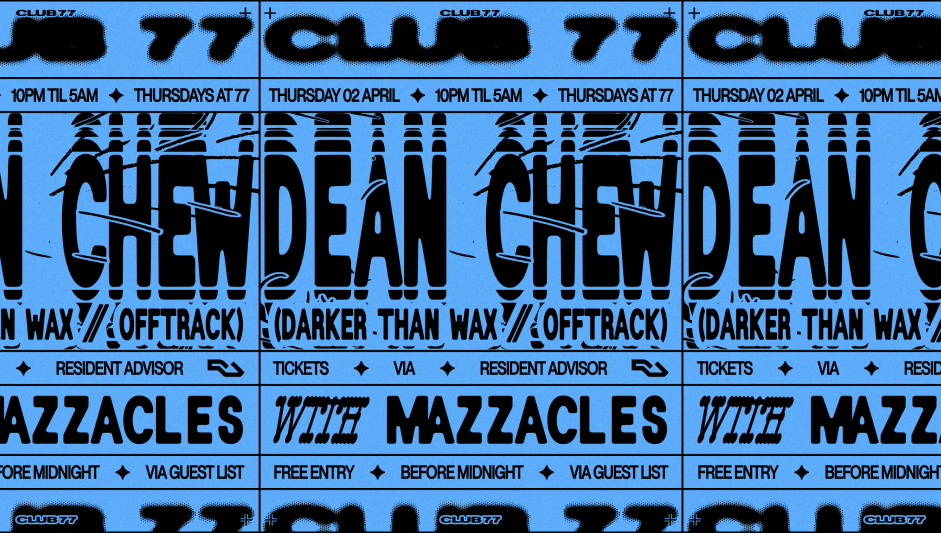
Catch Dean Chew (Darker Than Wax/Offtrack) with Mazzacles on Thursday 02 April at Club 77 from 10pm — 5am.
See event information, register for free entry before midnight via guest list, and grab early bird tickets via RA.
Stay up to date with Dean Chew via Instagram & Soundcloud.
Stay up to date with Darker Than Wax via Instagram, Bandcamp and Soundcloud.



.webp)


